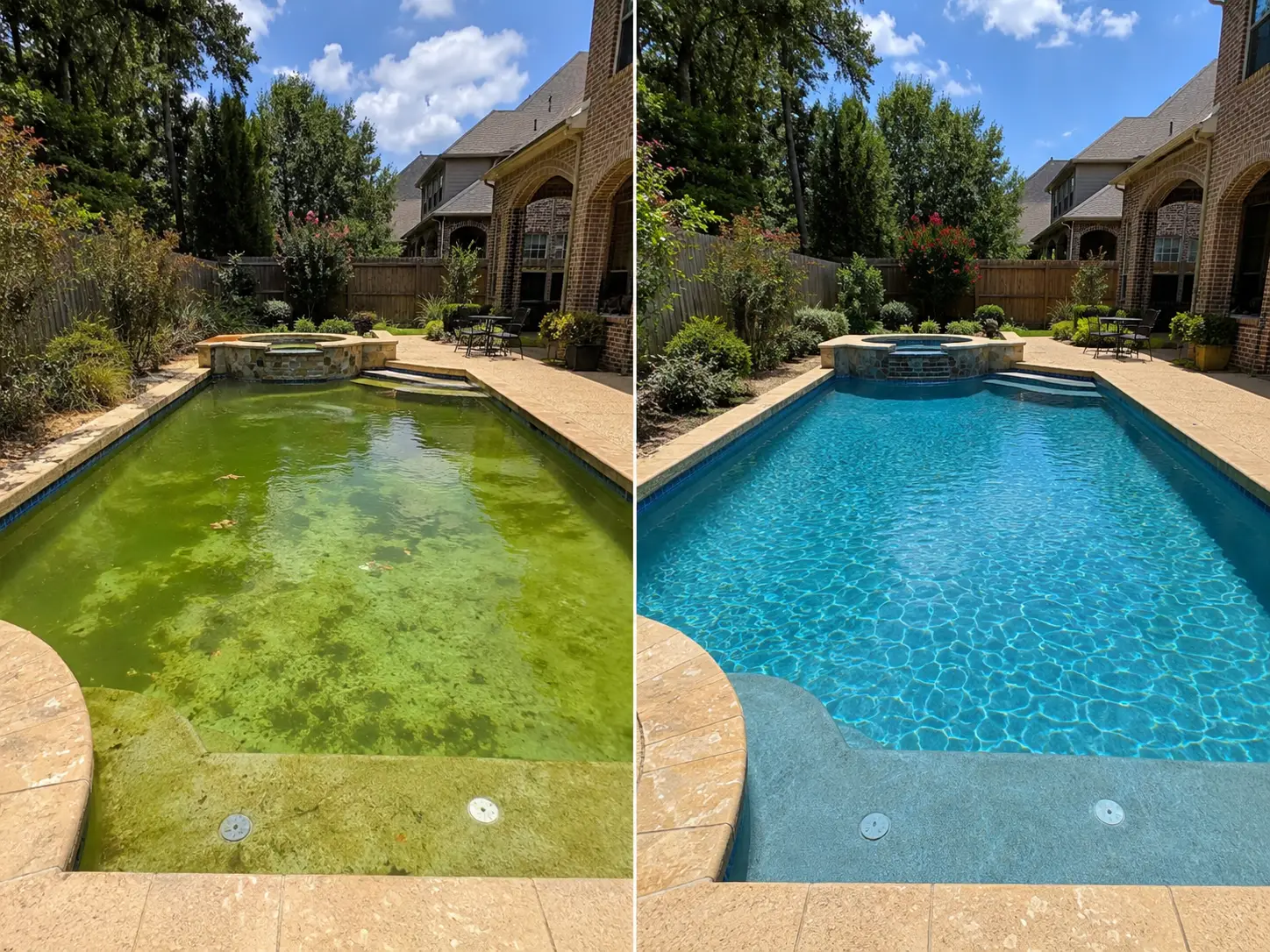
If you own a pool in Charlotte, you probably know how quickly clean water can turn cloudy or green when conditions are right. One week the pool looks clear, and the next week it has a green tint, slippery walls, or algae starting to collect around the steps and corners.
At Damon’s Pool Care, we see this happen often around Charlotte and nearby Mecklenburg County neighborhoods. Green pool water is frustrating, but it usually does not happen for just one reason. It is often a mix of warm weather, rain, low chlorine, poor circulation, and missed maintenance.
The good news is that most algae problems can be prevented with consistent pool care, regular water testing, and proper equipment operation. If your pool is already green, it may need more than a quick scoop or splash of chemicals to get it back under control.
Why Does Pool Water Turn Green?
A green pool is usually caused by algae growth. Algae are tiny plant-like organisms that can grow quickly when the water is not properly sanitized or circulated.
In Charlotte, algae can become a problem because our pool season includes warm temperatures, humidity, rainstorms, pollen, and plenty of organic debris. All of those conditions can make pool water harder to manage, especially during the spring and summer months.
When chlorine levels drop too low, algae can begin growing on the pool walls, floor, steps, and inside areas with poor circulation. Once algae starts spreading, it can make the water look green, cloudy, dull, or dirty.
Common Reasons Pools Turn Green in Charlotte
1. Low Chlorine Levels
Chlorine helps keep pool water sanitized and safe for swimming. When chlorine levels get too low, algae and bacteria have a chance to grow.
This can happen after heavy rain, hot weather, a busy swim weekend, or simply from not checking the water often enough. During Charlotte’s warmer months, chlorine can burn off faster, which means the pool may need more attention than it does during cooler weather.
2. Poor Water Circulation
Your pool pump and filter are responsible for moving and cleaning the water. When circulation is weak, chemicals do not spread evenly, and debris can settle in low-flow areas.
Algae often starts in corners, behind ladders, around steps, or along shaded areas where water movement is limited. If your pump is not running long enough, the filter is dirty, or the system is not pulling water properly, algae can start to grow even if the pool was recently treated.
3. Dirty or Clogged Filters
A pool filter plays a big role in keeping water clear. If the filter is dirty, clogged, or overdue for cleaning, it cannot remove debris and contaminants as well as it should.
A struggling filter can lead to cloudy water first, then green water if the issue is not corrected. Filter care is one of the biggest parts of preventing algae because clean water depends on strong circulation and filtration.
4. Heavy Rain and Storms
Charlotte weather can change quickly, and heavy rain can throw pool water chemistry off balance. Rain can dilute chlorine, affect pH and alkalinity, and wash dirt, leaves, pollen, and other contaminants into the pool.
After a storm, a pool may look fine at first, but the water can shift quickly if it is not tested and adjusted. This is one reason we recommend paying close attention to your pool after heavy rain or windy weather.
5. Leaves, Pollen, and Organic Debris
Charlotte pools deal with plenty of leaves, pollen, grass clippings, and other organic material. When that debris sits in the water, it uses up chlorine and gives algae more opportunity to grow.
Skimmer baskets, pump baskets, and the pool surface should be cleaned regularly. Even small amounts of debris can create problems if the water is already low on sanitizer.
6. Unbalanced Water Chemistry
Chlorine is important, but it is not the only thing that matters. pH, alkalinity, stabilizer, and other water balance levels all affect how well chlorine works.
For example, if the pH is too high, chlorine may not sanitize as effectively. That means the pool can still develop algae even when chlorine is present. Regular water testing helps catch these problems before they turn into bigger issues.
What Should You Do If Your Pool Starts Turning Green?
If you notice a slight green tint, cloudy water, or algae on the walls, do not ignore it. Algae usually gets worse the longer it sits.
Here are a few first steps homeowners can take:
Remove Debris From the Pool
Start by skimming leaves, emptying baskets, and removing anything sitting on the pool floor. The less debris in the pool, the easier it is for chemicals and filtration to work.
Brush the Walls, Steps, and Floor
Brushing helps loosen algae from pool surfaces so it can be treated and filtered out. Pay attention to corners, steps, tile lines, and shaded areas.
Check That the Pump Is Running Properly
Make sure the pump is moving water and that the system has good flow. If the return jets feel weak, the skimmer is not pulling well, or the pressure gauge is abnormal, there may be a circulation or filter issue.
Test the Water Before Adding Chemicals
It is always better to test the water before adding chemicals. Guessing can make things worse, especially if the pH, alkalinity, or stabilizer levels are already off.
A green pool may need shock treatment, brushing, filtration, vacuuming, and follow-up chemical balancing. In some cases, it may take more than one visit or treatment to fully clear the water.
How to Prevent Algae Before It Starts
The easiest green pool to fix is the one that never turns green in the first place. Preventing algae usually comes down to consistency.
Keep a Regular Pool Cleaning Schedule
Weekly pool service helps keep the water clean, balanced, and monitored. During each service, debris can be removed, baskets can be emptied, walls can be brushed, and water chemistry can be checked.
For many Charlotte homeowners, weekly pool maintenance is the difference between enjoying the pool and constantly trying to catch up with problems.
Maintain Proper Chemical Balance
Balanced water helps chlorine work the way it should. Testing and adjusting chemicals regularly can help prevent algae, cloudy water, scaling, staining, and irritation.
Water chemistry can change fast during hot weather, heavy use, and storms, so it is important to stay ahead of it.
Keep the Filter Clean
A dirty filter can make it much harder to maintain clear water. Filter cleaning should be part of routine pool maintenance, especially if the pool sees a lot of debris, pollen, or heavy swimming activity.
If your pool keeps turning cloudy or green even after adding chemicals, the filter may need attention.
Run the Pump Long Enough
Your pool needs enough circulation each day to move water through the filter and distribute chemicals. In warmer months, shorter pump run times may not be enough.
If you are unsure how long your pump should run, that depends on your pool size, equipment, season, and water conditions.
Watch the Pool After Storms
After heavy rain or wind, check the pool as soon as possible. Skim debris, empty baskets, and test the water. A little attention after a storm can help prevent a green pool later in the week.
When Should You Call a Pool Service?
Some algae problems can be handled early if the water is only slightly cloudy or lightly tinted. But if the pool is dark green, you cannot see the floor, or algae keeps coming back, it is a good idea to call for professional help.
You should also consider calling a pool service if:
- The pool turns green soon after being treated
- The water stays cloudy even with chemicals
- The filter pressure seems off
- The pump has weak circulation
- You are not sure which chemicals to add
- The pool needs vacuuming, brushing, and multiple adjustments
- You want ongoing weekly pool service to prevent future problems
At Damon’s Pool Care, our goal is to help Charlotte homeowners keep their pools clean, clear, and easier to manage. We understand how local weather, debris, and pool usage affect water quality, and we focus on practical maintenance that helps prevent problems before they get out of hand.
Green Pool Problems Usually Come Back Without Routine Care
One thing we always want homeowners to understand is that clearing a green pool is only part of the solution. If the cause is not corrected, the algae can return.
For example, if the pool has poor circulation, a dirty filter, or unbalanced water chemistry, adding chemicals may only provide temporary improvement. The water may clear up for a short time, then turn cloudy or green again.
That is why ongoing maintenance matters. A clean pool is not just about how it looks today. It is about keeping the water balanced, the equipment working, and the pool ready to use week after week.
Need Help With a Green Pool in Charlotte?
If your pool is turning green, cloudy, or hard to manage, Damon’s Pool Care can help. We provide pool cleaning and maintenance services for homeowners in Charlotte and nearby Mecklenburg County communities.
Whether you need help clearing up algae or want regular weekly pool service to prevent problems, we are here to make pool care less stressful.
Contact Damon’s Pool Care today to schedule pool service in Charlotte, NC and get your pool back on track.