
Pool Pump Repair Charlotte, NC
Pool pumps that hum, leak, scream or will not prime, diagnosed and repaired on the pad in Charlotte, Matthews, Weddington, Waxhaw and Fort Mill.

Pool Pump Repair in Charlotte That Starts With a Real Diagnosis
Most dead pumps are a motor, a seal or an air leak. Not a new pump.
The pump is the one piece of pool equipment that runs every day, and in Charlotte it runs hard. Summer afternoons in the upper 80s and 90s push motors to their thermal limit. Pine pollen in April chokes suction lines and starves the impeller. Willow oak leaves do the same in the fall. Two or three hard freezes most Januarys crack pump housings that were left full. A pump that hums and will not start turns a pool green within days. Nearly every pump call we take in Charlotte comes down to a short list of parts.
Damon’s Pool Care repairs pool pumps on the pad across Charlotte, from Myers Park and SouthPark to Ballantyne and Providence Plantation. We replace motors, shaft seals, start capacitors, impellers, lid O-rings, unions and drain plugs. We work on Hayward, Pentair, Jandy and Zodiac pumps, single-speed and variable-speed. Priming failures get traced to the actual air leak instead of a guess. Wiring at the motor, timer or automation panel gets fixed on the same visit. A pool light that trips the GFCI is a separate job, covered under pool light repair. If a motor has died on a sound wet end, we swap the motor and seal and leave the rest alone. If the housing is cracked or the pump is the wrong size, we say so and quote a replacement pump.
Every repair starts with a written quote before any part comes off. Hearing a hum, seeing a puddle, or watching the basket fill with air? Call (980) 998-3777 or request a quote and describe what the pump is doing.
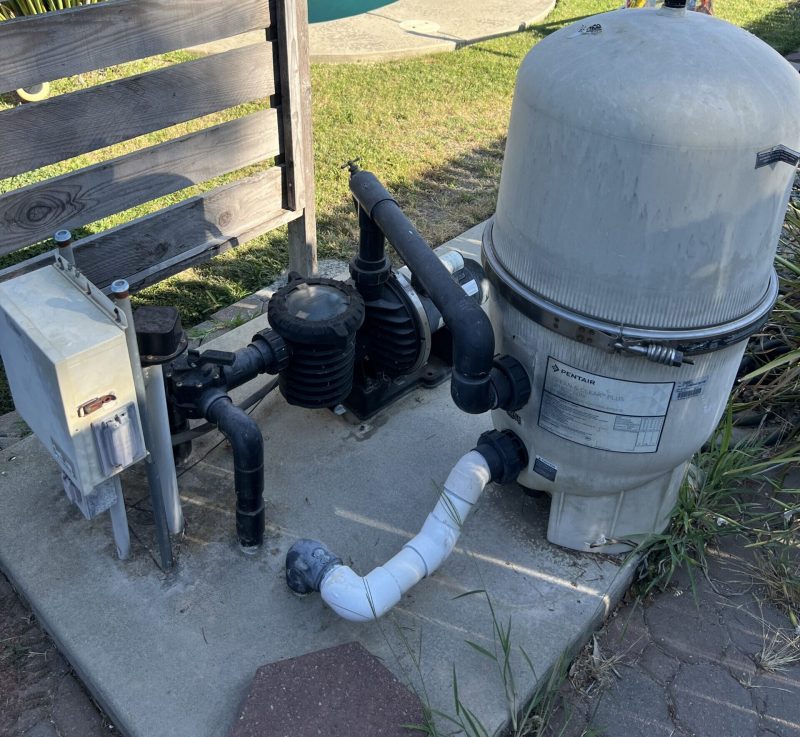




Why Pool Pump Repair Matters So Much in Charlotte
Heat, freezes, pollen and soft water all land on one small motor
A pool pump has two halves. The wet end is the strainer basket, housing, impeller, diffuser and seal plate. It moves the water. The motor bolts to the back and spins the impeller through a shaft seal. That seal keeps water out of the bearings. Almost every pump failure traces to one of those parts or to the plumbing right in front of them. Charlotte’s climate gives each of them a hard time at a predictable point in the year.
July heat and thermal overload
Pool pump motors carry a thermal overload. It cuts power when the windings get too hot and resets once they cool. Picture a 95 degree afternoon in Ballantyne. The motor sits in full sun on a concrete pad with a packed filter behind it. It trips the overload, cools for a while, restarts, and does it again. Owners often read that as a pump that is dying. Sometimes it is, because failing bearings run hotter. Just as often the cause is a dirty filter, a clogged impeller or a cooling fan packed with grass clippings. A motor that is hot to the touch while running is normal. One that cycles off and on is telling you something.
January freezes
Charlotte gets two or three hard freezes most winters. Water left standing in a pump housing expands and splits the strainer pot or the seal plate. The crack is often hairline and hides until spring. Then the pump will not hold prime, and a wet spot appears under the housing. We see this every March in Weddington, Marvin and Waxhaw. Pads there sit away from the house, and nobody notices when the timer fails during a cold snap. A cracked housing is not a seal job. It is a wet end replacement or a new pump.
Pollen, leaves and starved suction
The impeller needs a full column of water coming in from the skimmer and main drain. Loblolly pine pollen in April forms a mat that packs skimmer and pump baskets in days. Willow oak leaves in Myers Park, Dilworth and Eastover do the same from October into December. With the suction side blocked, the impeller cavitates. It spins in a mix of water and vapor. The sound changes to a rattle or a gravel noise, and the pump may vibrate. Run that way long enough and the heat cooks the shaft seal. Then water reaches the bearings and the motor is finished.
Soft water, acid dosing and the shaft seal
Charlotte Water is very soft, so most pools here need calcium added. Over a season the pH drifts up and gets corrected with acid. Chemicals fed through the suction side pass through the pump at full strength. That includes trichlor tabs dropped in a skimmer. The acid corrodes the shaft seal and shortens the life of the bearings behind it. Pools on Union County well water add metals to the same mix. A seal attacked by chemicals usually shows up as a drip between the motor and the wet end.
Any one of those conditions takes a pump down. Together they explain why pumps are such a common repair call in Charlotte. They also explain why a correct diagnosis matters more than a fast parts swap.
Pool Pump Problems We Repair
These are the complaints we hear most on the phone, what each usually means, and what we do about it. We work on Hayward, Pentair, Jandy and Zodiac pumps, including variable-speed models with onboard drives.
Pump hums but will not start
A steady hum with no spinning means the motor has power but cannot turn. The usual causes, in order, are a weak or failed start capacitor, bearings seized by water past the shaft seal, and an impeller jammed with debris. A capacitor is a quick fix. Seized bearings on a motor more than a few years old usually mean a motor and seal replacement. Turn the pump off while you wait. A humming motor heats its windings with no cooling airflow.
Pump will not prime or keeps losing prime
Priming failure is almost always air getting into the suction side. The lid O-ring is the first suspect, especially if it is flattened, cracked or dry. Next come the suction union, a loose drain plug and a cracked pump housing. A split pipe or valve ahead of the pump does it too. A pump that primes and then slowly fills the lid with bubbles has a small leak. One that never pulls water has a large leak or a blocked line. We pressure-test and isolate the leak rather than replacing parts in hope. Do not leave a pump running that will not prime. Running dry melts the seal and warps the housing.
Leak under the pump
Where the water comes from tells the story. A drip between the motor and the wet end is the shaft seal. Moisture at the lid is the O-ring. A wet union is the union O-ring or a cracked union nut. Seepage from the housing body with no fitting nearby is a freeze crack. Shaft seals and O-rings are routine repairs. A cracked housing is replaced, never patched. It runs under pressure, and a patch lets go at the worst time.
Grinding, screaming or rattling
A high-pitched scream or a metallic grind is bearing noise, and it comes from the motor. The bearings are usually ruined by water past the shaft seal. The fix is a new motor and seal together. Replacing one without the other is how the new motor fails in a season. A lower rattle, like gravel in the housing, is cavitation. That points to the suction side, not the motor. We listen before we unbolt anything.
Breaker trips or the motor cycles off
A breaker that trips the instant the pump starts points to a shorted winding, a failed capacitor or wet wiring in the junction box. One that trips after the pump has run a while points to a motor pulling too much current. Usually it is fighting bad bearings or a blocked impeller. A motor that stops on its own and restarts later is the thermal overload. We check amperage against the nameplate and inspect the wiring and conduit. Only then do we condemn the motor.
Weak flow at the returns
Low flow with the pump running smoothly is usually not the pump. The filter is loaded, a valve is half closed, the skimmer is packed, or the impeller is clogged with pollen and hair. On a variable-speed pump it can be a schedule set too slow for the cleaner or heater. We check the whole water path from skimmer to return before touching the pump. Replacing a pump that was never the problem is an expensive way to find a dirty filter.
If the pump is sound and the real problem is upstream, we say so. Loaded filters are handled on our filter cleaning visits. Cracked tanks, torn grids and leaking valves fall under pool filter repair. Heater flow faults that trace back to the pump are covered on our pool heater repair page.
Repair the Motor or Replace the Whole Pump?
This is the question behind most pump calls, and the answer depends on the wet end. Say the housing, seal plate, diffuser and impeller are intact and the pump is sized right for the pool. Then a motor and shaft seal replacement brings it back for a fraction of the cost of a new pump. We do this often on Hayward Super Pumps and Pentair WhisperFlo and SuperFlo pumps that are ten years old and otherwise fine. The seal gets replaced every time the motor comes off. A used seal on a new motor leaks.
Replacement makes more sense in a few cases. A housing or seal plate cracked by a freeze. An oversized pump that strains the filter and raises suction entrapment risk at the drain. A single-speed unit above about one horsepower, since federal efficiency rules mean most replacement pumps in that range now ship as variable-speed anyway. Or a pump that has lost two motors in a few years, which usually means something upstream is killing them. A variable-speed pump at low speed most of the day cuts electricity use significantly and runs much quieter. The ENERGY STAR pool pump page explains where those savings come from. When replacement is the right call, we handle sizing and install through our pool pump installation service.
Owners also ask whether a variable-speed motor can bolt onto an old single-speed wet end. Sometimes a matching VS motor exists for that housing and the swap works. Often the housing was never designed for it, and the result cavitates or leaks. We check the model numbers and tell you which situation you have.
What to Expect From a Pool Pump Repair Visit
We start by listening to the pump run, if it runs, and looking at where water is or is not going. Then the power goes off at the breaker and the lid and basket come off. We check the lid O-ring, the basket, the impeller through the housing and the drain plugs. The motor is checked for shaft play, bearing noise and heat. The capacitor and wiring get inspected. On variable-speed pumps we check the drive for fault codes. If the complaint is priming, we isolate the suction side and find the leak.
You get a written quote for the repair before anything is replaced. It names the parts and, where it matters, shows the motor and whole-pump options side by side. With your go-ahead, the work is done and the pump goes back together with a lubricated lid O-ring and a new seal. It is primed and run up to pressure. We check amperage and watch every fitting for leaks. The timer or automation schedule is confirmed before we leave. We also tell you what caused the failure. A pump that died from a packed filter or a suction-side chlorinator will die again if that stays the same.
Why Charlotte Homeowners Choose Damon's for Pool Pump Repair
Plenty of companies in Charlotte answer every pump complaint with a new pump. Sometimes that is right. Often the wet end is fine and a motor, a capacitor or a lid O-ring would have done it. We diagnose first and quote in writing before work starts. When both make sense, the repair and the replacement price sit side by side. You choose with the numbers in front of you. We work on Hayward, Pentair, Jandy and Zodiac pumps and know which seals, capacitors and O-rings each one takes.
Damon has serviced Charlotte pools for more than ten years and is licensed and insured. He has worked on more than a hundred homes across Charlotte, Matthews, Stallings, Weddington, Wesley Chapel, Waxhaw, Marvin, Fort Mill and Indian Land. His Google reviews keep saying the same three things: honest about what you need, fair on price, and the water stays clear. Pump repair is one part of our pool repair services, and we handle the filter and chemistry problems that shorten a pump’s life. Call (980) 998-3777 or request a quote online. Tell us the brand, what the pump is doing and what it sounds like.
Our Service Areas
- Charlotte, NC
- Ballantyne
- Matthews
- Stallings
- Weddington
- Wesley Chapel
- Waxhaw
- Marvin
- Fort Mill, SC
- Indian Land, SC
Pool Pump Repair Questions From Charlotte Homeowners
These are the pump questions we answer most often by phone and on the pad in Charlotte. If yours is not here, call and describe the sound.
It depends on which part failed, the pump brand, and whether the motor is single-speed or variable-speed. A lid O-ring, drain plug or capacitor is a small job. Replacing a motor and shaft seal is a mid-sized one. A cracked housing means a new wet end or a new pump. Damon's Pool Care diagnoses the pump first and gives a written quote before any part is replaced. When both make sense, the repair and replacement prices are shown together.
Repair it if the wet end is sound and the pump fits the pool. A motor and seal swap on a good housing is far cheaper than a new pump. Replace it if the housing is cracked, the pump is oversized for the plumbing, or it is an older single-speed unit that has already lost one motor. A variable-speed replacement cuts power use enough that it often pays for itself on a pump running long hours in Charlotte summers.
The motor is getting power but cannot turn. Most often the start capacitor is weak or dead. Next most common is bearings seized because water got past the shaft seal. Sometimes the impeller is jammed with debris. Shut the pump off at the breaker while you wait. A humming motor builds heat fast with no airflow. A capacitor is a quick repair. Seized bearings usually mean a motor and seal replacement.
Air is getting into the suction side, or the suction line is blocked. Check the lid O-ring first, then the suction union and the drain plugs. Make sure the pool water covers the skimmer opening. A pump that fills the lid with bubbles while running has a smaller leak at one of those points. If you cannot find it in a few minutes, turn the pump off and call. Running dry damages the shaft seal and warps the housing.
Most pool pump motors last around ten years, give or take a few, and some go longer. Water past the shaft seal, running dry, cavitation from a clogged suction line, and chemicals fed through the skimmer all shorten that. Heat matters too, which is why motors on sun-baked pads with packed filters fail sooner. A motor that screams, trips breakers or cycles on the thermal overload is near the end. Variable-speed motors run cooler and quieter at low speed.
Yes, that sound is the motor bearings, and they do not get better. Bearings usually fail because water got past the shaft seal, so the fix is a new motor and a new seal together. If the noise is more of a rattle, like gravel in the housing, that is cavitation from a starved suction side. The motor may be fine. Clear the baskets and check for an air leak. If the sound stays, call before the seal cooks.
Dry everything off, run the pump, and watch. A drip from the gap between the motor and the wet end is the shaft seal. Wetness at the clear lid is the O-ring. Dripping at a threaded union is that union's O-ring or a cracked nut. Seepage from the housing body with no fitting nearby is a freeze crack. If the puddle only appears with the pump off, suspect the filter tank or its clamp band instead.
It can be either, and we check both before condemning the motor. A trip the moment the pump starts usually means a shorted winding, a failed capacitor or water in the motor's wiring box. One that happens after the pump runs a while means the motor is drawing too much current, often from bad bearings or a jammed impeller. If the GFCI trips with the pump off, the wiring or the breaker itself is the suspect. We measure amperage against the nameplate and go from there.
Yes, within reason. A pool pump motor running for hours in a Charlotte summer gets too hot to keep your hand on. That alone is not a fault. What is not normal is a motor that shuts itself off and restarts later. That is the thermal overload tripping. It means the motor is overheating from a dirty filter, a blocked suction line, failing bearings or a cooling fan packed with debris. Find the cause before the overload stops resetting.
Sometimes. Some manufacturers make a variable-speed motor that bolts to an existing wet end. When the model numbers match, the swap works and saves the cost of replumbing. Many older housings have no matching motor, and forcing a close fit leads to a mismatched impeller, cavitation or leaks. We check the housing and seal plate part numbers against what is available. If a motor swap is not an option, a full variable-speed pump install is the next step, and we quote both.