
Pool Pump Installation Charlotte, NC
Variable-speed pool pump replacement sized to your plumbing, wired, programmed and tested on the pad. Serving Charlotte, Matthews, Weddington, Waxhaw, Fort Mill and Indian Land.

Pool Pump Installation for Charlotte Pools That Run All Summer
The pump is the one part that runs every day. Here is how we pick and install the right one.
A Charlotte pool pump works harder than most. It runs through pine pollen in April, red clay runoff all summer, and willow oak leaves from October into December. Then it sits through two or three January freezes that crack housings and seal plates. Most pumps we replace in Myers Park, Ballantyne and Matthews are single-speed motors past ten years old. They are loud and expensive to run. When the motor finally dies, the wet end is usually worn out with it.
Damon’s Pool Care sizes the new pump to your plumbing and pool volume, not to the sticker on the old motor. Most replacements today are variable-speed, because federal efficiency rules mean pumps above about 1 HP now ship that way. We install Pentair IntelliFlo, Hayward TriStar VS and Super Pump VS, and Jandy FloPro VS. We match the pump to any automation on the pad. The job includes new unions, replumbing where the footprint changes, rewiring, and a programmed speed schedule for a six-hour turnover. We start it up with you there. You get a written quote with the model number before anything is ordered.
This page is for owners with a dead or dying pump, a single-speed motor driving up the power bill, or new automation that needs a compatible pump. Call (980) 998-3777 or request a quote. Tell us the pump model and pipe size if you know them. If the pump only needs a seal or a capacitor, we will say so. That work is pool pump repair.
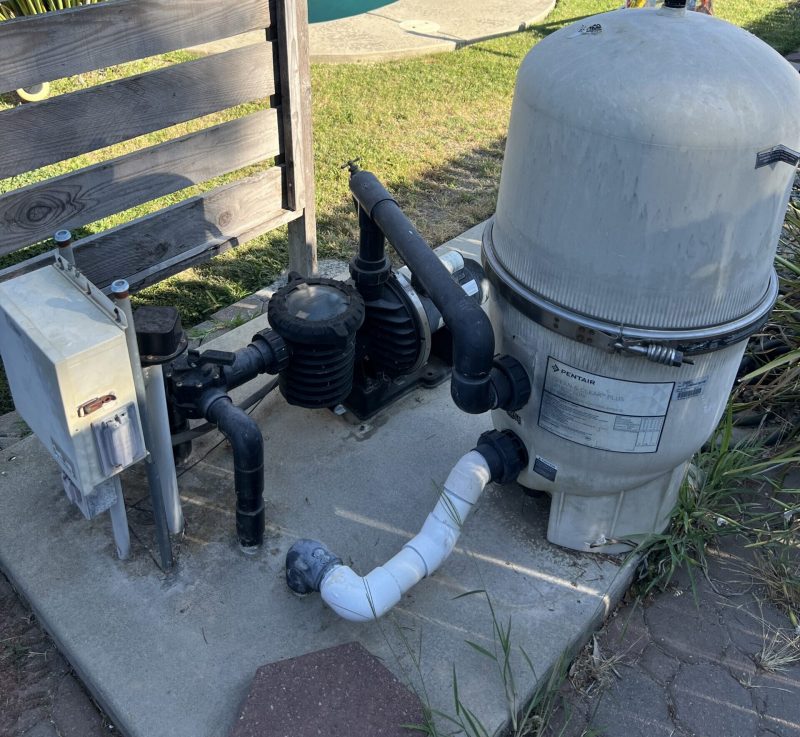




Why Pool Pump Installation Matters in Charlotte
Long run times, heavy debris and January freezes wear pumps out early
The pump moves every gallon in your pool through the filter and back. If it is too small, the water never clears. If it is too big, it strains the filter, pulls hard on the suction lines and wastes power. In Charlotte the pump also deals with a few local conditions that shorten its life and raise the bill.
Pollen and leaf seasons
Oak and maple pollen start in March. Loblolly pine pollen peaks mid to late April and coats the water yellow for weeks. In the fall, willow oaks in Myers Park, Dilworth and Eastover drop narrow leaves from October into December. A pump that runs at one high speed for eight hours a day handles this by brute force. A variable-speed pump handles it by running low and slow for most of the day. The skimmer keeps pulling, the filter keeps catching, and the motor barely warms up.
Summer heat and storm runoff
Highs sit in the upper 80s and 90s from June through September. Afternoon thunderstorms roll through most weeks. Storms wash Piedmont red clay and lawn fertilizer into the pool. The clay packs the filter, pressure climbs, and the pump works against that pressure. An old single-speed motor running hot on a 95-degree afternoon is where thermal overload trips start. The motor shuts down, cools, restarts, and does it again. Each cycle wears the windings and the start capacitor a little more.
Two or three hard freezes a year
Charlotte gets a few January nights cold enough to freeze the water inside a pump. Housings, strainer lids and seal plates crack when the water inside expands. We see it every February on pads that were not running or drained. A cracked housing on a ten-year-old single-speed pump is rarely worth repairing. A new housing costs a large share of a new pump, and the motor behind it is near the end anyway.
What a single-speed motor costs to run
A single-speed pump draws full power every minute it runs. A variable-speed pump of the same size runs at a fraction of that power at low speed. Pump power falls off steeply as speed drops. Cutting the speed in half cuts power by far more than half. A Charlotte pool runs eight to twelve hours a day from April through October. That difference shows up on the power bill every month. ENERGY STAR publishes efficiency data on certified models at energystar.gov if you want to compare.
Put together, those conditions explain why pump replacement is one of the most common equipment jobs on Charlotte pads. Most of the pumps we pull are single-speed motors past ten years old with a worn wet end behind them.
Pool Pumps We Install and How the Installation Works
We install pumps from Hayward, Pentair and Jandy on residential pools and pool-spa combinations. The brand usually follows what is already on the pad. The size follows the plumbing and the pool, never the sticker on the old motor.
Variable-speed pumps
Pentair IntelliFlo, Hayward TriStar VS and Super Pump VS, and Jandy FloPro VS make up most of what we install. Federal efficiency rules mean replacement pumps above about 1 HP now ship as variable-speed. That makes it the default for most in-ground pools. A variable-speed motor can run anywhere from a slow trickle to full power. We set it low for the long filtration cycle and higher for the cleaner or the spa. It holds that schedule on its own. These pumps are also quiet. At low speed, most owners cannot hear the new pump from the patio.
Two-speed and single-speed pumps
Small pools, above-ground pools and some booster setups still use single-speed or two-speed pumps where the rules allow it. We install them when they make sense. On a 10,000-gallon pool with 1.5-inch plumbing, a small two-speed pump may be the right call. We will tell you either way rather than sell the biggest motor in the catalog.
Sizing to the plumbing, not the horsepower
Your plumbing sets a flow limit. A 1.5-inch suction line can only move so much water before velocity gets too high. A 2-inch line moves more. We measure pipe size, count suction and return lines, and estimate pool volume. The pump is sized to turn the pool over in about six hours at a moderate speed. Oversizing a pump raises pressure on the filter, shortens cartridge life and increases suction entrapment risk at the drains. Bigger is not better here.
Replumbing, wiring and automation
The new pump gets new unions so it can come off for service later. If the footprint or port height changes, we replumb the suction and return to fit. The motor is wired for the voltage on the pad, and the bonding lug is reconnected. If the pump needs a new circuit or breaker, that goes in the quote before work starts. Pumps running with Pentair IntelliCenter, Hayward OmniLogic or Jandy iAquaLink are matched to the controller brand. That way the speeds can be scheduled from the app.
Programming, startup and walk-through
We prime the pump, bleed the filter and check for suction leaks at the lid and unions. Then we program the speed schedule. That means a long low-speed filtration run, a higher speed for skimming or the cleaner, and a spa speed if there is one. You get a walk-through on the control pad and a written record of the speeds we set. Clean filter pressure is recorded at each speed so the next tech knows what normal looks like.
A pump install often happens alongside other equipment work. If the filter tank is cracked or undersized for the new pump, see pool filter installation. If you want the pump, heater and lights on one app, see pool automation. Heaters that depend on steady flow are covered under pool heater installation.
Repair or Replace? When a New Pool Pump Makes Sense
Not every bad pump needs replacing. A lid O-ring, a shaft seal, a start capacitor or a new impeller fixes a lot of pumps for a modest bill. Those jobs live on our pool pump repair page. Replacement makes sense in a few clear cases.
The housing or seal plate is cracked, usually from a freeze. A dead motor sits on a wet end more than ten years old. Or the pump is single-speed, past ten years, and the motor is on its way out. Sometimes the pump was never the right size for the plumbing in the first place. In each of those cases, money spent on a repair buys another year or two on equipment that is already worn. A new variable-speed pump buys quiet operation, lower bills and a fresh start on the pad.
One more case worth naming: a dead motor on a good wet end. Swapping only the motor is a real option, and we do it. But the new motor has to be rated for that wet end. On a single-speed pump the swap also keeps the high running cost. We lay out both numbers and let you pick.
Signs Your Pool Pump Is Due and What to Expect From the Install
The pump hums but will not start. That is usually seized bearings, water past the shaft seal, or a weak start capacitor. A pump that screams or grinds has bad bearings. One that will not prime after you clean the basket has a suction-side air leak. Check the lid O-ring, the unions and the drain plugs. Water dripping from under the motor means the shaft seal has failed and water has been reaching the bearings. The breaker trips on startup. The motor shuts off on hot afternoons and restarts later. Any of those on a pump past ten years old is a reason to price a replacement next to the repair.
The install itself is a single visit in most cases. We confirm pipe size and voltage and bring the pump named in the quote. Then we swap it, replumb as needed, wire it, prime it and program it. You watch the startup and get the speed settings in writing. The pool stays full the whole time. If the quote calls for a new circuit, that electrical work is scheduled before the pump goes in. A permit is often required in Mecklenburg and Union counties for that part.
Why Charlotte Homeowners Choose Damon's for Pool Pump Installation
A pump is an easy thing to oversell. A bigger motor sounds like a better one. Plenty of pads in Charlotte are running 3 HP pumps on 1.5-inch plumbing because someone did exactly that. We size to the plumbing and the pool and put the model number in writing. Then we explain why that one and not a bigger one. The quote comes before anything is ordered, and nothing on the pad changes until you approve it.
Damon has serviced Charlotte pools for more than ten years. His Google reviews keep saying the same things: honest about what you need, fair on price, and the water stays clear. If your pump only needs a seal, we will say so. If it needs replacing, you will know why. We install pumps across Charlotte, Matthews, Stallings, Weddington, Wesley Chapel, Waxhaw, Marvin, Fort Mill and Indian Land. Call (980) 998-3777 or request a quote, and have the old pump’s label and your pipe size handy if you can. Pump installs are one part of our pool equipment installations service.
Our Service Areas
- Charlotte, NC
- Ballantyne
- Matthews
- Stallings
- Weddington
- Wesley Chapel
- Waxhaw
- Marvin
- Fort Mill, SC
- Indian Land, SC
Pool Pump Installation Questions From Charlotte Homeowners
Straight answers to what Charlotte owners ask before replacing a pool pump. If yours is not here, call and read us the label on the motor.
It depends on the pump model, the pipe size, whether the plumbing or wiring needs changes, and whether it ties into automation. A variable-speed pump costs more up front than a single-speed and less to run every month after that. Damon's Pool Care gives you a written quote with the model number before anything is ordered. Nothing changes on the pad until you approve it.
Yes, for almost any in-ground pool in Charlotte. A variable-speed pump runs at low speed for most of the day, and power use falls steeply as speed drops. That means a large cut in electricity cost over a season that runs April through October here. It is also much quieter and easier on the filter. Replacement pumps above about 1 HP now ship variable-speed anyway under federal efficiency rules.
A straight replacement with the same pipe size and voltage is usually finished in one visit, including priming, programming and the walk-through. Jobs that need replumbing, a new circuit or automation integration take longer and are scheduled after the quote is approved. The pool stays full throughout. We tell you the plan before the day so there are no surprises on the pad.
Size to the plumbing and pool volume, not to the old motor. A pool with 1.5-inch pipe cannot safely use the flow a 3 HP pump produces at full speed. We measure pipe diameter, count lines and estimate gallons. Then we pick a pump that turns the water over in about six hours at a moderate speed. On most Charlotte pools that lands on a mid-range variable-speed model, sized on site.
A pool pump motor commonly runs about a decade, less on pads with poor drainage or no freeze protection. Replace rather than repair when the housing is cracked or the motor is dead on a wet end past ten years. A single-speed pump that costs a lot to operate is another reason. Seals, capacitors and O-rings are repairs, not reasons to replace.
Any of the mainstream variable-speed pumps run fine on 1.5-inch plumbing as long as they are programmed to speeds the pipe can handle. Pentair IntelliFlo, Hayward TriStar VS and Super Pump VS, and Jandy FloPro VS all work. The limit is speed, not brand. We set the schedule so the pump never pushes more flow than 1.5-inch pipe should carry. If you have automation, match that brand.
In most cases, a variable-speed pump in the same general size class. Because of federal efficiency rules, most replacement pumps above about 1 HP now come variable-speed anyway. The new pump runs at low speed most of the day and costs far less to operate than the old one running flat out. We check pipe size and your filter rating before picking a model so you do not end up oversized.
Often, yes, especially on 1.5-inch plumbing. A 3 HP pump at full speed moves more water than smaller pipe can safely carry. That raises filter pressure, shortens cartridge life and increases suction entrapment risk at the drains. On a variable-speed pump the fix is programming, since it can run slow. On a single-speed 3 HP pump there is no fix except replacing it with the right size.
If the new pump uses the existing circuit, voltage and breaker, the wiring is part of our install. If the pad needs a new circuit, a different voltage or a new breaker, that work goes into the quote first. A permit is often required in Mecklenburg and Union counties for new electrical work. We tell you which situation you have after looking at the pad.
Yes, keep the pump, salt cell and controller on one brand where you can. Pentair IntelliCenter controls IntelliFlo speeds directly, Hayward OmniLogic does the same with TriStar VS, and Jandy iAquaLink with FloPro VS. Mixing brands means relays and workarounds. Between two models in the same brand, we choose by pipe size, pool volume and filter rating. The horsepower number on the box comes last.