
Pool Salt Systems Charlotte, NC
Salt chlorine generators installed, converted from tab chlorine, cleaned and repaired on pools in Charlotte, Matthews, Weddington, Marvin, Waxhaw, Fort Mill and Indian Land.

Pool Salt Systems and Saltwater Conversions in Charlotte
A salt pool is still a chlorine pool. The difference is where the chlorine comes from and how steady it stays.
Tab chlorine on a Charlotte pool is a weekly fight. Trichlor tablets push stabilizer up a little every week until chlorine stops working well. Summer sun in the upper 80s and 90s burns chlorine off between visits. A thunderstorm dumps fertilizer runoff into the pool while the chlorinator is already running low. Owners in Ballantyne and Matthews tell us the same thing: the water swings between too much chlorine and none at all. A salt chlorine generator, the heart of pool salt systems, makes chlorine in the plumbing all day at a set output. The level holds steady instead of spiking and crashing.
Damon’s Pool Care installs salt chlorine generators from Hayward (AquaRite), Pentair (IntelliChlor) and Jandy (AquaPure), and converts tab-chlorine pools to salt. A conversion adds the cell and control board to the pad. We dissolve the right weight of pool salt to reach about 3,200 ppm. Then we balance stabilizer, calcium and pH so the cell runs clean. We size the cell to about twice the pool’s gallons so it runs at a lower output and lasts longer. We also clean and replace cells and repair control boards and flow switches. The cell can be tied into Pentair, Hayward or Jandy automation.
Salt suits owners who want steadier water with less handling of chemicals. It pairs well with a variable-speed pump and automation. Charlotte’s soft tap water needs calcium added either way, which matters for the cell, and we handle it. Salt systems sit within our specialty pool services. Call (980) 998-3777 or request a quote.
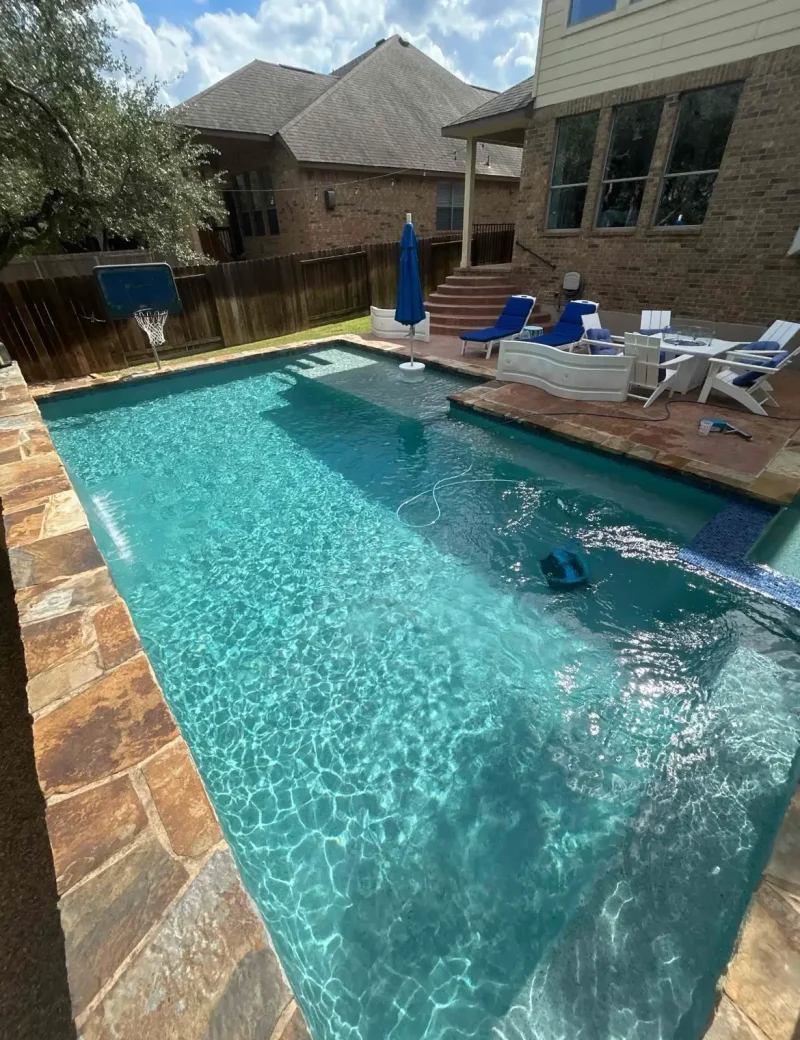




Why Pool Salt Systems Work Well in Charlotte
What a cell does, and what Charlotte water does to it.
A salt system is a cell with metal plates installed in the return line, plus a control board. Water carrying about 3,000 to 3,500 ppm of dissolved salt passes over the plates. A low voltage runs through them, and the salt splits into chlorine that dissolves into the water. The chlorine sanitizes the pool and turns back into salt. The salt is not consumed; you top it up for splash-out and backwash. At 3,000 ppm the water tastes less salty than a tear.
Steady chlorine through Charlotte summers
Chlorine burns off in sunlight and gets used up by swimmers, pollen and storm runoff. A tab feeder adds it in a lump when the tablet is fresh and barely at all when it is worn. A salt cell adds it in a thin steady stream every hour the pump runs. In June through September, when a Charlotte pool is working hardest, that steadiness is the whole point. Stabilizer kept at 30 to 50 ppm protects the chlorine the cell makes from the sun. Salt systems do not have to run flat out.
Soft water, added calcium and the cell plates
Charlotte Water is soft. Calcium hardness comes out of the tap near 25 ppm. Every pool here needs calcium added to protect plaster and heaters. That added calcium, combined with pH that drifts upward in any salt pool, is what scales a cell. Scale forms on the plates as a white crust and the cell makes less chlorine. We set calcium to the low end of 200 to 400 ppm. We keep pH at 7.4 to 7.6 with regular acid dosing. The cell gets inspected on a schedule rather than waiting for a low-salt light.
Cold water and winter output
Salt cells make less chlorine in cold water. Most shut down below a set water temperature. In a Charlotte January that is normal, not a fault. The pool needs very little chlorine in cold water anyway, and we cover it with a small dose when needed. The cell picks back up in April as the water warms. Charlotte pool water stays cold from December into March. Expect the cell to do very little for those months, and plan on a small tab or liquid dose if the pool is uncovered. Owners who see a low output reading in February and buy a new cell are usually replacing a cell that was fine.
Salt and the things around the pool
Salt water at 3,000 ppm is mild. It is still corrosive to bare metal, unsealed natural stone and soft brick coping over years of splash-out. Cupro-nickel heat exchangers in modern heaters handle salt water fine when pH is kept in range. Older copper exchangers and unbonded metal fittings do not. Before a conversion we look at the coping, the deck, the heater and the ladder anchors. You hear what should be sealed or replaced. On well water in Union County we also test for metals. The cell’s output can stain the pool with iron or copper present.
Salt is not a set-and-forget system. It is a steadier system that still needs its stabilizer, pH and calcium watched. Owners who understand that are the ones who love it.
Pool Salt Systems: Services We Provide
We handle the salt system from the first conversion through years of cells. Here is what each service involves.
Saltwater conversion from tab chlorine
The pad gets checked for space on the return line and a spot for the board. We confirm the pump flow and the filter are in good order. The water gets tested with special attention to stabilizer and metals. Then we plumb in the cell and flow switch, mount and wire the board, and add pool salt. It takes roughly 250 pounds of salt per 10,000 gallons to reach 3,000 ppm, dissolved by brushing with the pump running. The cell is started once salt reads right, and we set output for the season.
Cell sizing
A salt cell is rated by the gallons it can chlorinate running 100 percent of the time. We size the cell to about twice the pool’s volume. A 20,000 gallon pool gets a 40,000 gallon cell. It runs at half output, works less hard and lasts years longer. Undersized cells run flat out all summer, scale faster and die early. The small price difference between cell sizes pays for itself the first time you do not replace one.
Cell inspection and cleaning
Cells come out of their unions for inspection periodically through the season. Clean plates are left alone. Scaled plates get a diluted acid soak just long enough to dissolve the calcium, then a rinse. Acid soaking a clean cell wears the plate coating for nothing, so we do not do it on a calendar. Flow switches and the cell’s temperature and salt sensors get checked at the same time.
Cell replacement
Every cell has a working life measured in hours of operation. A cell that reads low salt with correct salt, clean plates and a good board is aging. It will not recover. We replace it with the same brand and the correct size, and reset the board. We install Hayward T-Cells, Pentair IntelliChlor IC cells and Jandy AquaPure cells.
Control board and sensor repair
Boards fail from surges and from years outdoors. Flow switches stick, salt sensors drift and relays burn. We diagnose the board against a known-good cell before condemning either one. That way you do not buy a cell when the board was the problem, or the other way around. Boards also need a correct water temperature reading to compute salt. A bad sensor shows up as a false low-salt reading.
Automation integration
A salt cell managed by the automation panel is easier to live with. Its output changes from the app, it runs on the pump’s schedule and it shuts off with the pump. We integrate Pentair IntelliChlor with IntelliCenter, Hayward cells with OmniLogic, and Jandy AquaPure with iAquaLink. Details are on our pool automation page. Salt pools with a variable-speed pump should run the pump long enough at low speed for the cell to make its daily chlorine. We program that too.
Salt pools still need the rest of the pool cared for. Pollen and leaves still fill the filter; see filter cleaning. Heaters still need pH in range to protect the exchanger; see pool heater repair if yours is leaking. And a pool that went green because a scaled cell quit is handled by our green to clean service.
Salt Systems: Clean, Repair or Replace the Cell?
A low-salt warning is the start of the diagnosis, not the end. First we test salt with an independent meter. If salt is low, we add salt. If salt is right and the plates are scaled, we clean the cell. When salt and plates both check out and the reading is still low, two suspects remain. The cell’s coating is wearing out, or the board is misreading. We test the board with a known cell before replacing anything. Cold water lowers output and can trigger a low reading in winter, and that is normal. Owners who follow this order replace cells when they are actually worn, which is years apart. Not every time a light comes on.
Signs Your Salt System Needs Attention
The low-salt or check-cell light is on. Chlorine tests low with the cell set high. White crust is visible on the plates through the cell’s clear body. Chlorine was fine all spring and dropped in July when the pool needed it most. That usually means a cell running flat out and scaling. The pool has gone slightly green at the edges. The board shows no output or flickers. Any of those is a call. Salt systems fail in predictable ways, and we start with the salt test and cell inspection before anything is bought. Expect a clear answer: salt, clean, board or cell, with the cost of each before work.
Why Charlotte Homeowners Choose Damon's for Pool Salt Systems
Salt systems are sold as maintenance-free and they are not. We tell you that up front, size the cell properly, set the water up for it and show you what the readings mean. When the low-salt light comes on, we test before we sell. The written quote for a conversion lists the cell model and size, the board, the salt and the start-up chemistry before any work starts. Pricing depends on pool gallons, pad layout, the cell size chosen and whether automation is involved. We quote after seeing the pad.
Damon has serviced Charlotte pools for more than ten years. That includes salt pools from SouthPark and Ballantyne to Providence Plantation, Matthews, Weddington, Marvin, Waxhaw, Fort Mill and Indian Land. His Google reviews keep saying the same things: honest about what you need, fair on price, and the water stays clear. Call (980) 998-3777 or request a quote with your pool’s gallons and a photo of the pad. You will hear which cell, what size and what the water needs first.
Our Service Areas
- Charlotte, NC
- Ballantyne
- Matthews
- Stallings
- Weddington
- Wesley Chapel
- Waxhaw
- Marvin
- Fort Mill, SC
- Indian Land, SC
Salt System Questions From Charlotte Homeowners
Straight answers to what Charlotte owners ask about salt pools. If your cell is showing a warning, tell us the reading when you call.
It depends on the pool's gallons, which sets the cell size, and the brand that matches your pump and automation. Pad layout and how much salt and chemistry the water needs matter too. A 15,000 gallon pool with a simple pad is a smaller job than a 30,000 gallon pool-spa combo with automation. Damon's Pool Care gives a written quote with the cell model and size before any work starts.
Cleaned only when the plates show scale, which we check at each cell inspection. Many Charlotte cells with good pH control go a full season without needing an acid soak. Replacement comes when salt tests correct, the plates are clean, the board checks out and output is still low. Properly sized cells last for years. Undersized cells running at full output scale faster and wear out sooner.
About 250 pounds per 10,000 gallons to go from zero to 3,000 ppm. Most cells run best between 3,000 and 3,500 ppm, and we aim near 3,200 to allow for rain dilution. A 20,000 gallon pool starting from fresh water takes about 500 pounds. Salt is not used up by the cell; you add some after heavy rain, backwashing or a drain. Test salt with a meter before adding any, since the board's reading can be wrong.
A saltwater pool is a chlorine pool. Salt systems make the same chlorine you would add by hand, but steadily, all day. Levels hold in the range the CDC describes for healthy swimming instead of swinging. Water feels softer and smells less because combined chlorine stays low. You buy salt and acid instead of tablets and shock. You still test and balance, and you still watch stabilizer and calcium.
It can over years if ignored. Salt at 3,000 ppm is mild, but splash-out drying on unsealed stone, soft brick and bare metal leaves deposits and corrosion. Sealing coping and rinsing the deck handle most of it. Modern heaters with cupro-nickel exchangers are fine when pH stays 7.4 to 7.6. Older copper exchangers and poorly bonded metal are the risk, and we check them before converting. Bonding all metal parts matters more on a salt pool.
The cell is reading its own plates, not the water. A reading of zero or very low salt with a correct independent test means one of three things. The plates are scaled, the cell's coating is worn out, or the water is cold enough to drop output. Pull the cell and look. Scale gets a short acid soak. Clean plates with a persistent low reading in warm water mean the cell is at the end of its life. Or the board's temperature sensor is wrong.
The T-15, rated for 40,000 gallons. The T-9 is rated for 25,000 gallons and would run near full output all summer on a 22,000 gallon pool. That scales it faster and wears it out sooner. We size cells at about twice the pool's volume for exactly that reason. The larger cell costs a bit more up front and lasts years longer. Match the cell to the board you have, since not every board accepts every cell.
Every cell has a high-salt limit set by its maker and shows a warning above it; most run near 3,000 to 3,500 ppm, and a few are built to run far higher. Over range, the cell may shut down to protect itself, and the water starts to taste salty. The fix is a partial drain and refill, since salt does not evaporate. This is why we add salt in stages and test with a meter between them. Rain dilutes slowly, so overshooting is a mistake that lingers all season.
Not necessarily. Cold water lowers a cell's reading and most boards cut output below a set temperature, so a zero in February is common. Wait for the water to warm up in spring, then test salt with a meter and look at the plates. If salt is right and the plates are clean and the reading stays at zero in warm water, the cell or board has failed. We test the board with a known cell before either is replaced.
Usually a scaled or undersized cell quietly stopped making enough chlorine while the output light still looked fine. The next suspect is stabilizer that drifted above range so chlorine could not keep up. After that, a pump schedule too short for the cell to make a day's chlorine. We test salt and stabilizer, pull the cell, and check hours of pump run. Clearing the water is a green to clean job; fixing the cause keeps it from repeating.