
Pool Automation Charlotte, NC
App control of the pump, heater, lights, salt cell and valves, installed on existing pads in Charlotte, Matthews, Weddington and Waxhaw.

Pool Automation That Fits How Charlotte Pools Actually Run
Better than a timer clock and a walk to the pad.
Most Charlotte equipment pads still run on a mechanical timer clock and a wall switch for the heater. That works until the week it does not. Pine pollen in April calls for longer pump runs at low speed. July thunderstorms knock the power out and the clock drifts an hour. A January freeze arrives overnight and the pump should be running but is not. Somebody has to walk out to the pad in the dark and fix each of those. In Weddington and Waxhaw, where lots are big, that walk is a long one.
Damon’s Pool Care installs and programs pool automation on existing pads and new equipment. We work with Pentair IntelliCenter and EasyTouch, Hayward OmniLogic, OmniHub and VS Omni, and Jandy iAquaLink. The controller takes over the pump schedule, heater, lights, valve actuators, salt cell and water features. You run all of it from your phone. We size the panel to the relays and sensors your pad needs. Then we wire it, set up the app and program schedules that fit Charlotte seasons. We also repair existing systems: dead panels, stuck actuators, relays that will not close and apps that show offline.
Automation pays off most on pools with a variable-speed pump, a heater or an attached spa. That is where the savings are real. It is also worth it for anyone tired of the walk to the pad. Automation sits within our specialty pool services. Request a quote with a photo of your pad or call (980) 998-3777.
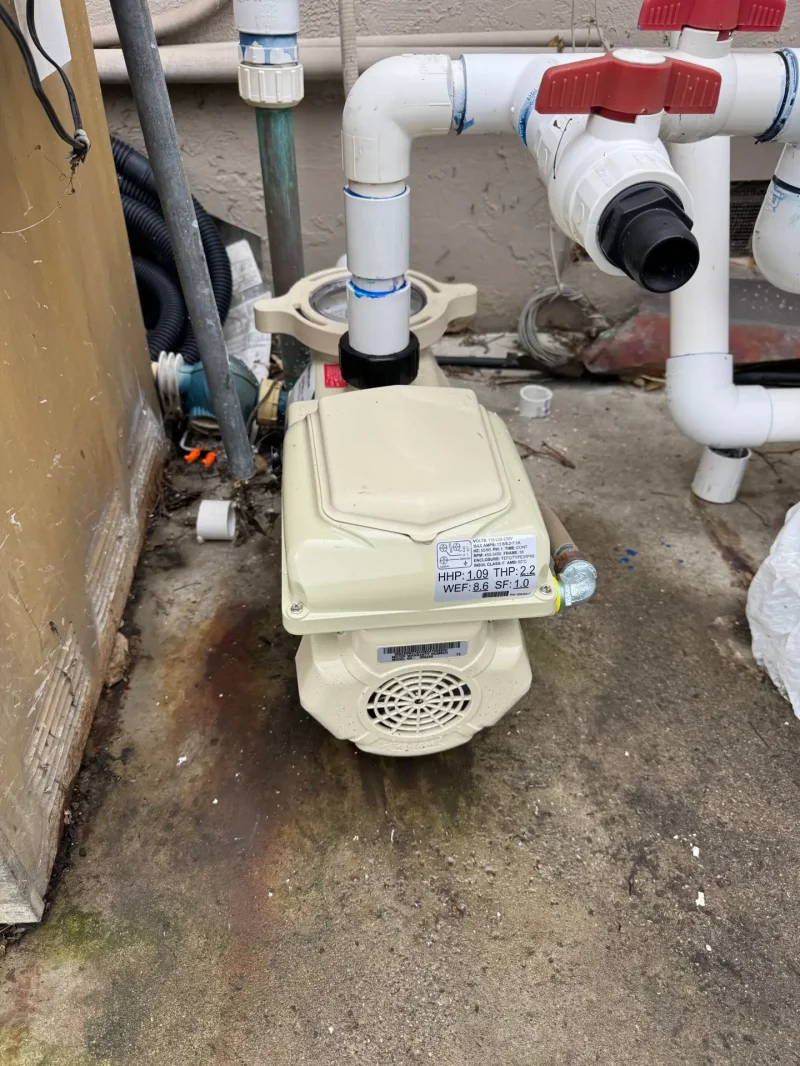




Why Pool Automation Makes Sense in Charlotte
Four times a year the schedule needs to change. A timer clock cannot do it.
A pool controller is a set of relays, a few sensors and a brain that follows a schedule. That sounds simple because it is. The value shows up when the pad needs to do something different from last week. That happens more in Charlotte than owners expect.
Pollen season runs
Oak and maple pollen start in March, and loblolly pine pollen peaks in mid to late April. Pollen floats. A pump that only runs a few hours overnight leaves a yellow film on the surface all day. The fix is a long, low-speed run during daylight so the skimmer keeps pulling. A controller paired with a variable-speed pump does that on a schedule. Come May, you change the schedule back from the couch instead of resetting pins on a clock.
Summer heat and storm power loss
June through September brings highs in the upper 80s and 90s and afternoon thunderstorms. Warm water needs longer filtration, and storms knock out power. A mechanical timer loses time with every outage. It quietly drifts until the pump runs at 3 a.m. and stops at noon. A controller keeps its clock through outages and picks the schedule back up. The app shows you whether the pump is running without a trip to the pad.
Freeze protection in January
Charlotte gets two or three hard freezes most winters. Pump housings and heater manifolds crack when water sits still in them below freezing. Every major controller has a freeze protection mode. It reads air temperature and runs the pump when the temperature drops. On a pool-spa combo it also cycles the valves so the spa plumbing moves too. Nobody has to remember. We see freeze-cracked equipment every winter, and most of it was on a timer clock.
Spa use and heater discipline
Spa mode on a pool-spa combo is a four-part move. Two valve actuators, the heater and the pump at the right speed all have to work together. On a manual pad that is a trip outside, four changes, and a wait. From the app you tap spa mode, set the temperature and walk out when it is ready. More to the point, the heater turns off when the spa schedule ends. A heater left running overnight on a manual pad is one of the most expensive mistakes we see on gas bills.
What it actually saves
The money is in the pump. A variable-speed pump at low speed for 12 hours uses far less electricity than a single-speed pump for 8. The controller is what makes that schedule stick through the seasons. The second saving is the heater. A heater that shuts off on schedule instead of running until someone notices pays for a lot of relays. The third is time. Fewer trips to the pad, no resetting clocks after storms, and no guessing whether the pump ran while you were at the beach.
None of this needs a fancy pool. A plain rectangle with a variable-speed pump and a salt cell gets most of the benefit. The payoff comes from the pump running at the right speed for the right hours. That is where the electricity goes.
Pool Automation Systems We Install and Service
We install three controller families. They match the equipment on most Charlotte pads. Our one firm rule is to keep the pump, salt cell and controller on the same brand wherever possible. Mixed brands can be made to work with relays. You lose the pump speed control and cell monitoring that make automation worth having.
Pentair IntelliCenter and EasyTouch
IntelliCenter is the current Pentair panel. We recommend it for Pentair pads with an IntelliFlo pump and an IntelliChlor cell. It controls pump speeds directly, reads the salt cell and runs multiple bodies of water. EasyTouch is the older panel and still serviceable. We repair and reprogram them and add the ScreenLogic interface where it is missing. Both connect to the Pentair app.
Hayward OmniLogic, OmniHub and VS Omni
OmniLogic is the full panel. It suits pads with multiple actuators, a heater and a spa. OmniHub is a smaller box for a simple pool. It gives app control of the pump, lights and cell without a full panel. VS Omni is the controller built into Hayward’s variable-speed pumps. For a plain pool it is often all the automation anyone needs. All three run on the same Hayward app.
Jandy iAquaLink
Jandy’s iAquaLink panels pair with FloPro and VS pumps and the AquaPure salt cell. Jandy also makes a lot of the heaters already on Charlotte pads. That makes it a natural fit for pools with a JXi heater. The iAquaLink app is straightforward and the panels are easy to work on. Older Jandy AquaLink panels are still common on Charlotte pads. Some can be brought onto the app with an upgrade kit instead of a whole new panel, which we check before quoting a replacement.
Retrofits to existing pads
Most of our automation jobs are retrofits. The timer clock comes off and the controller’s load center goes on. Existing pump, heater, light and cell wiring moves into the relays. Actuators are added to the valves that need them. Where the old pump is single-speed, we talk about replacing it at the same time. Automation plus a variable-speed pump is where the savings live. See pool pump installation for that side of the job.
Repairs and troubleshooting
We fix what goes wrong with automation. That means a panel dead after a surge, a relay stuck open, or an actuator that stops short of its cam. It also means a temperature sensor that reads wrong and keeps the heater off, or an app that says offline. Offline is usually Wi-Fi reach or the antenna, not the panel. Heater faults are often the heater itself; we handle those under pool heater repair.
Automation ties in with two other jobs we do. A salt cell runs best when the controller manages its output, which is covered on our salt systems page. Color-changing LED lights need a controller to do their tricks, which is covered under pool light installation.
Retrofit, Repair or Replace: Deciding What Your Pad Needs
Three outcomes are possible. A working panel from the last decade with a dead relay or a tired actuator gets repaired. Relays and actuators are modest parts, and the panel has years left. A panel older than that, with no app support and parts getting scarce, usually gets replaced. Repairing it twice costs more.
A pad with no automation gets a retrofit sized to what you own and what you plan to add. If a new pump or heater is coming in the next year or two, we plan the panel around it. Nothing gets rewired twice. The quote lists what stays, what goes and what the app will control on day one. It also notes anything on the pad that will not play well with the new panel, such as a single-speed pump or a heater with no remote terminal. You decide with the full picture in front of you.
Signs Your Pool Would Benefit From Automation
You have a variable-speed pump but it runs one speed. Nobody programmed the schedule. The heater has been left on at least once and the bill showed it. You travel and wonder whether the pump is running. You have a spa you rarely use because heating it is a chore. A freeze is coming and you set an alarm to go turn the pump on. Your timer clock has lost time again. Any one of those is reason enough.
Here is what to expect from the job. Most retrofits take about a day on the pad, and the quote says if yours will run longer. Your phone is set up before we leave and schedules are programmed for the current season. You get a walk-through so you know how to change them. A controller does not replace water testing. Chlorine and pH still need checking, and weekly pool service still handles the brushing and the filter. What changes is that the pump, heater and valves do what they were told, every day, without a trip outside.
Why Charlotte Homeowners Choose Damon's for Pool Automation
Automation is sold hard by equipment dealers. Often that means a panel that costs more than the pool needs. We size it to your pad. A simple pool gets a simple controller. A pool-spa combo with a heater and six actuators gets the panel that can run it. The written quote lists the model numbers and every relay and actuator before work starts. If the pad needs electrical work beyond the controller, that is in the quote too, so you see the whole job before saying yes.
Damon has serviced Charlotte pools for more than ten years. He has programmed controllers on pads from Myers Park and SouthPark to Ballantyne, Matthews, Weddington, Marvin, Waxhaw, Fort Mill and Indian Land. His Google reviews keep saying the same things: honest about what you need, fair on price, and the water stays clear. Call (980) 998-3777 or request a quote and include a photo of your equipment pad. You will hear which controller fits and whether a retrofit or a repair is the smarter spend.
Our Service Areas
- Charlotte, NC
- Ballantyne
- Matthews
- Stallings
- Weddington
- Wesley Chapel
- Waxhaw
- Marvin
- Fort Mill, SC
- Indian Land, SC
Pool Automation Questions From Charlotte Homeowners
What Charlotte owners ask before putting a controller on the pad. If your question is not here, call and describe your equipment.
It depends on the controller size and how many relays and valve actuators the pad needs. It also depends on whether the pump and salt cell are already the same brand, and how much wiring has to move. A simple pool with a variable-speed pump is a small job. A pool-spa combo with a heater, lights and several valves is a larger one. Damon's Pool Care writes a quote with model numbers before work starts.
The one that matches the brand of your pump and salt cell. Pentair IntelliCenter for Pentair pads, Hayward OmniLogic or OmniHub for Hayward pads, Jandy iAquaLink for Jandy. All three are reliable and all three have good apps. Mixing brands means the controller can switch the pump on and off but cannot set its speed. You lose the main savings. Pick by what is on the pad, not by reviews.
The pump schedule and speed, heater setpoint and on/off, and pool and spa lights including color modes. Also valve actuators for spa mode and water features, the salt cell output, and extras like a cleaner pump or landscape lights. Most panels read water and air temperature and run freeze protection. Chemical controllers with pH and ORP probes can be added. They hold chlorine and pH in the ranges the CDC describes for healthy swimming. Most Charlotte pools do not need them.
Most retrofits on an existing pad take a day. The timer comes off and the load center and panel go on. Existing equipment wiring moves into the relays, actuators are mounted and the app is set up before we leave. Larger pads with a heater, spa and multiple features can run into a second day. If a new pump or electrical work is part of the job, that adds time and is scheduled with it.
Yes, if the pool has or will have a variable-speed pump. The savings come from running that pump at the right speed for the right hours. A Hayward VS Omni pump, a small OmniHub or an IntelliCenter gives a plain pool app control and freeze protection. No big panel needed. If the pool has a single-speed pump and no heater, the case is weaker. We would tell you to put the money into the pump first.
Pick the one that matches your pump and salt cell. IntelliCenter with an IntelliFlo pump and IntelliChlor cell is a complete Pentair system. iAquaLink with a FloPro pump and AquaPure cell is the Jandy version. Both handle a pool-spa combo, a heater and lights without trouble. If you are starting from scratch with no brand loyalty, the heater already on your pad is a reasonable tiebreaker.
Almost always. The controller replaces the timer and takes over existing wiring to the pump, heater, lights and cell. Old valves get actuators mounted on them. The limits are a single-speed pump, which the controller can switch but not slow. Very old heaters without a remote terminal are the other. We check both on the quote visit. Pads older than 30 years also get a look at GFCI protection on the light circuit.
The panel runs its schedules without Wi-Fi. Your pump, heater and freeze protection keep working if your internet goes down. The app needs Wi-Fi or a wired connection to the panel to control it remotely. Most offline problems are signal strength at the pad, not the panel. A Wi-Fi extender near the pad or the manufacturer's antenna kit usually solves it. We check signal at the pad before installing.
Probably not. The panel is doing its job locally and has lost its connection to your router. Check that the router is up, then power cycle the panel's communication module or antenna. Look for a new Wi-Fi network name or a changed password since it last connected. If it reconnects for a few days and drops again, signal strength at the pad is the problem. An extender fixes it. A dead panel stops the schedule too.
The controller is probably not telling it to. Common causes are a loose two-wire remote connection between the panel and the heater, or a heater left in local mode instead of remote mode. A water temperature sensor reading higher than the setpoint will do it. So will a pump speed too low to close the heater's flow switch. We trace the wiring and the settings in that order. The heater itself is usually fine in this case.