
Spa Cleaning Charlotte, NC
Attached spas and standalone hot tubs tested, balanced, scrubbed, purged and drained on a real schedule. Charlotte, Matthews, Weddington, Waxhaw and Fort Mill.

Spa Cleaning for Charlotte Hot Tubs That Get Used
A spa is a small, hot pool with a crowd in it. It needs its own routine.
A typical spa holds 300 to 500 gallons at up to 104°F. Put four people in it and you have the bather load of a full backyard pool packed into a bathtub. Sweat, sunscreen, lotion and deodorant go into the water. The heat and the jets speed up every chemical reaction. Chlorine that would last a week in a pool is gone in a day. What follows is the stuff Charlotte owners call us about. A greasy ring at the waterline. Foam when the jets kick on. Cloudy water, and a sharp chlorine smell that is really spent chlorine. Attached spas on Ballantyne and SouthPark pool pads have an extra problem. Every spillover cycle sends their chemistry into the pool and brings pool water back.
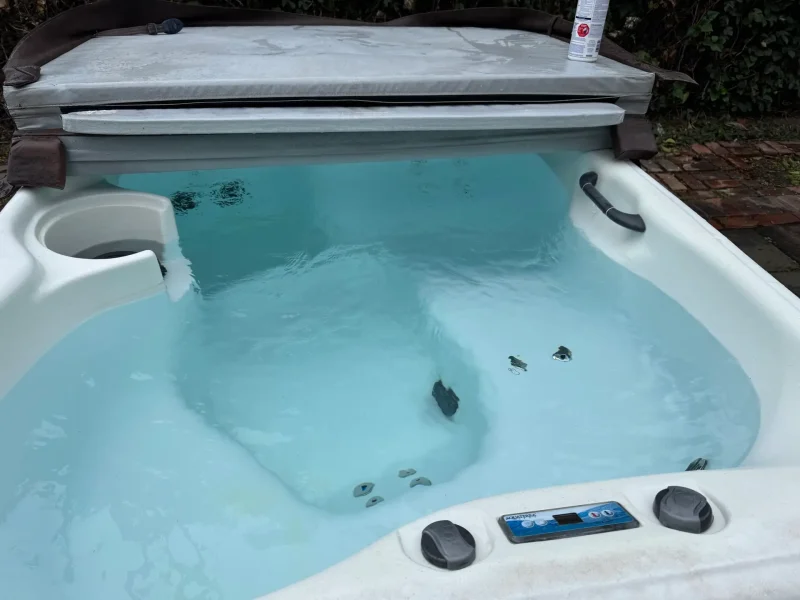
Damon’s Pool Care cleans both kinds: spas plumbed into the pool and standalone hot tubs on a deck. Each visit covers water testing and balancing, skimming, brushing and vacuuming, jet and filter cleaning, and scum line removal. When the water is due to go, we run a purge through the plumbing first. Then we drain, scrub the shell, clean the filter and refill with water balanced for Charlotte’s soft supply. We also look over the heater, pump, cover and controls while we are there.
Spa cleaning can be added to weekly pool service or booked on its own for a standalone hot tub. Tell us the gallons and how often it gets used, and we will set the schedule. Request a quote to get started.




Why Spa Cleaning Matters More Than Pool Cleaning in Charlotte
Hot water, small volume and heavy use change everything.
A pool forgives a missed week. A spa does not. The chemistry that keeps a 20,000 gallon pool clear has far less room to work in 400 gallons of hot water. Ideal numbers are the same for both: free chlorine 2 to 4 ppm, pH 7.4 to 7.6, alkalinity 80 to 120 ppm, calcium 200 to 400 ppm. What changes is how fast they move. A spa is built to turn its whole volume through the filter in about 30 minutes, against six hours for a pool. It still struggles to keep up with people. Here is what pushes Charlotte spas out of range.
Heat and aeration burn through sanitizer
Hot water speeds up chemical reactions. The jets pull air through the water constantly. Both drive chlorine off faster than in a pool. Every person adds sweat and body oil, which chlorine has to oxidize before it can do anything else. That reaction leaves combined chlorine behind, the chloramines that smell like a locker room and sting eyes. A spa reading 3 ppm on Friday afternoon can read zero by Saturday morning after four people used it. We test free and combined chlorine separately. That tells us whether the spa needs more sanitizer or a shock to break up chloramines.
Soft Charlotte fill water and the spa heater
Charlotte Water is very soft. Calcium hardness runs around 25 ppm and alkalinity near 20 ppm straight from the tap. A spa filled from the hose and left alone has corrosive water. Low calcium and low alkalinity let the pH swing. That water goes after the heater element or heat exchanger first, because it is the hottest metal in the system. Every refill in Charlotte needs calcium and alkalinity added and the pH set before the heater runs for long. The flip side shows up later. Once calcium is in the water, a pH that drifts above 7.8 drops scale on the heater and the shell. Keeping pH in range is the whole game in a spa.
Pollen, leaves and storm debris in an open spa
Pine pollen in mid to late April coats any spa that sits uncovered. In a few hundred gallons, a thin yellow film becomes a chemistry problem fast. Willow oak leaves land in attached spas across Myers Park and Eastover from October into December. Summer thunderstorms wash red clay and lawn fertilizer into spillover spas that sit below a lawn. Fertilizer brings phosphates and nitrates, which feed algae. Warm water is exactly what algae want. A cover handles most of this on a standalone hot tub. An attached spa needs the skimming and brushing done on a schedule.
Attached spas that spill into the pool
Most spas on Charlotte pool pads share the pump, filter and heater with the pool. In spillover mode the spa runs at pool temperature and its chemistry is the pool’s chemistry. Then the valves switch to spa mode and the heater brings it to 100°F or more. For the evening, the spa is its own small body of water. Afterward it dumps that water back into the pool. Chlorine demand, oils and pH all move between the two. An attached spa needs its own test and its own dose while it is isolated. A share of the pool’s weekly chemicals is not enough.
Left alone, these conditions stack up in the same order every time. Chlorine drops. Oils build a scum line. The water clouds, foam shows up on the jets, and the filter clogs. By the time it smells, the fix is a drain.
What Our Spa Cleaning Service Includes
Every spa visit covers the same checklist. That holds for a standalone hot tub in Weddington or a spillover spa in Providence Plantation. The difference between visits is what the water tells us to do.
Water testing and balancing
We test free chlorine, combined chlorine, pH, alkalinity, calcium hardness and stabilizer on site. When the water is getting old we check total dissolved solids too. Then we dose for the spa’s actual gallons, not a guess. Stabilizer matters less on a covered hot tub than on a sunlit pool. An open attached spa still loses chlorine to sunlight, so it needs cyanuric acid in the 30 to 50 ppm range. We share the readings with you after each visit.
Skimming, brushing and vacuuming
Spa shells are brushed down to the footwell and along the seat edges. That is where bodies rest and biofilm starts. The waterline, steps and the area around each jet get the most attention. Then the spa is vacuumed to pull out what the brush loosened. Pollen, sand and leaf grit that the small filter never caught come out with it.
Jet and filter cleaning
Spa filters are small cartridges doing heavy work. We pull them and pressure-wash the pleats from the top down. When body oils have set into the fabric, they soak in a degreaser. A cartridge that stays grey after washing is replaced, and we tell you before we do it. Jets are checked for flow and for the greasy build-up that collects inside the fittings. Air controls are cycled so they do not seize.
Scum line and oil removal
The ring at the waterline is body oil, sunscreen and lotion bonded to the shell. It feeds foam and eats chlorine. We remove it with a cleaner that is safe for acrylic and tile and does not foam itself. That rules out most household products. Attached spas with tile at the waterline also get checked for the start of calcium scale. We handle that on pool tile cleaning visits before it hardens.
Drain, purge and deep clean
Spa water wears out. Even with perfect chemistry, dissolved solids climb with every dose and every bather. Eventually the water will not hold balance. The rule is simple. Divide the spa’s gallons by three, then by the number of people who use it on an average day. The answer is the number of days between drains. A 400 gallon hot tub used by two people a day comes due about every two months. Before we drain, we run a purge product through the plumbing with the jets on. It pulls biofilm out of the pipes, which is where the slime in a spa actually lives. Then we drain, scrub the shell, and clean or replace the filter. The refill gets balanced for Charlotte’s soft supply before the heater runs.
Equipment and cover inspection
While the spa is open we look at the heater, the circulation pump, the air blower and the topside controls. On a pool-spa combo we check the valve actuators too. A cover that has gone heavy and waterlogged is noted. It is leaking heat and dripping dirty water back into the spa. Anything that needs work is quoted in writing. Repairs go through our spa repair service. When the spa shares equipment with the pool, the same crew handles the pool’s filter cleaning.
Spa cleaning is one part of our pool cleaning services in Charlotte. For an attached spa it fits into the weekly visit. For a standalone hot tub we set a visit frequency around how hard it gets used.
How Often Should a Hot Tub Be Drained and Cleaned?
Most owners drain far too rarely, and a few drain far too often. The spa’s gallons divided by three, divided by daily users, gives the number of days the water should last. A 500 gallon spa with a couple soaking most nights works out to roughly 80 days. The same spa used by a family of four comes due in about 40 days. A party weekend can shorten that to a week.
Between drains, the water tells us when the formula is wrong. Dissolved solids rising more than 1,500 ppm over the fill water is one signal. Chlorine that will not hold overnight is another. Foam that returns after a shock, or a cloudy look at normal chemistry, means the same thing. The water is finished. Weekly or biweekly chemical visits keep a lightly used spa stable. A hot tub that gets used every evening needs eyes on it more than once a week, and we will say so. Attached spas are the easiest case, because we see them on the pool visit every week anyway.
Signs Your Spa Needs Cleaning
Foam on the surface when the jets run is the first sign for most people. It comes from lotions, detergents left in swimsuits, body oils and some algaecides. Foam means the water is loaded with organics. A greasy or gritty ring at the waterline is the second sign. After that, watch for a cloudy look that a shock treatment does not clear. A strong chlorine smell, eye and skin irritation, and water that reads zero chlorine a day after dosing all belong on the list. Green or tea-colored water after a party is algae or metals getting a foothold in nutrient-rich water. Slimy fittings, a filter that goes grey within a week, or a heater that trips on a flow error point to biofilm in the plumbing. That calls for a purge and drain rather than more chemicals.
Why Charlotte Homeowners Choose Damon's for Spa Cleaning
A lot of pool companies treat the spa as an afterthought on the pool route. They skim it, drop in a tablet and move on. The spa smells by Saturday and the owner ends up draining it every month. We test the spa separately and dose it for its own gallons. The filter it actually runs on gets cleaned. Then it gets drained on a schedule that comes from the formula, not from the smell. For standalone hot tubs we show up for the tub alone, no pool required.
Damon has serviced Charlotte pools for more than ten years. His Google reviews keep saying the same things: honest about what you need, fair on price, and the water stays clear. If your spa needs a purge and a drain, we tell you and give the price before we start. If it just needs a shock and a filter clean, we say that instead. Spa cleaning is available as an add-on to weekly service or as a standalone visit. We cover Charlotte, Matthews, Stallings, Weddington, Wesley Chapel, Waxhaw, Marvin, Fort Mill and Indian Land. Call (980) 998-3777 or request a quote and tell us how many gallons and how many people.
Our Service Areas
- Charlotte, NC
- Ballantyne
- Matthews
- Stallings
- Weddington
- Wesley Chapel
- Waxhaw
- Marvin
- Fort Mill, SC
- Indian Land, SC
Spa Cleaning Questions From Charlotte Homeowners
These are the hot tub questions we get most from Charlotte owners. If yours is not here, call and describe the water.
It depends on the spa's size, whether it is attached to a pool or standalone, and how often it is used. A drain and purge takes longer than a routine chemical visit, so it costs more. Damon's Pool Care gives a written price before any work starts. For attached spas, spa cleaning is usually added to weekly pool service rather than priced as a separate trip.
Test and balance the water at least weekly, and more often with heavy use. Clean the filter every few weeks. Drain and refill on the interval the formula gives. Spa gallons divided by three, divided by the number of daily users, equals days between drains. For a 400 gallon spa used by two people that is about every two months. Wipe the scum line and brush the shell at each visit.
Water testing and balancing for chlorine, pH, alkalinity, calcium and stabilizer. Skimming, brushing and vacuuming the shell. Cleaning the jets and the filter cartridge. Removing the oil and scum line at the waterline. A check of the heater, pump, controls and cover. When the water is due, the visit becomes a purge, drain, scrub and refill. The new water is balanced for Charlotte's soft supply before the heater runs.
A routine chemical and filter visit is quick. A full purge, drain, clean and refill takes several hours, most of it waiting on the drain and the hose. The purge runs with the jets on for a stretch before draining to pull biofilm out of the plumbing. Refilling a 400 to 500 gallon spa from a garden hose takes a while on its own. Then the heater needs time to bring new water up to temperature.
Oils, lotions, sunscreen and detergent from swimsuits build up in a small volume of hot water, and the jets whip them into foam. Cloudiness usually means the filter is loaded, chlorine has been zero for a while, or the water is old and full of dissolved solids. Shock the water, clean the filter and check pH. If foam and haze return within days, the water is finished and needs a purge and drain.
Usually the opposite. That smell is combined chlorine, the chloramines left after chlorine reacts with sweat and oils. It means there is not enough free chlorine left to finish the job. Test free and combined chlorine separately. If combined is over 0.4 ppm, shock the spa to break the chloramines. Let the level settle before using it. If the smell keeps coming back within a day, the water is overloaded and due for a drain.
Four to six people in 400 gallons put more sweat, lotion and skin oil into the water than the chlorine could handle. Chlorine went to zero overnight. Warm water plus nutrients plus a little light is all algae need. Shock the water, clean the filter twice, brush the shell and bring chlorine back to 2 to 4 ppm. If it was green for more than a day or two, drain and refill. Do not soak until the water is clear and chlorine is back in range.
Some of them, in much smaller doses. Granular chlorine, pH increaser, alkalinity increaser and calcium are the same products. You measure them for a few hundred gallons instead of twenty thousand. Skip slow-dissolving trichlor tablets in a spa, since they are acidic and hard to control in hot water. Skip quaternary algaecides too, because they foam badly in a spa. Always measure by the spa's actual gallons.
Yes, if you want the drain to last. Biofilm grows inside the pipes and jet bodies, where brushes never reach. It is the main source of slime, smell and chlorine demand in a spa. Draining without a purge leaves it there to seed the fresh water. A purge product circulated through the jets before the drain pulls it out, and you will see what comes loose. We run a purge as part of our drain and deep clean visits.
Once the chemistry is back in range, yes. We balance the fresh water for calcium, alkalinity and pH, then bring free chlorine to 2 to 4 ppm. The heater brings it up to temperature, never past 104°F. The CDC healthy swimming guidance covers the basics for hot tubs. Check chlorine and pH before getting in, shower first, and keep soaks short in hot water.